Qalibaf’s reelection reinforces Iran’s military-political continuity amid US psychological warfare
By Shahrokh Saei
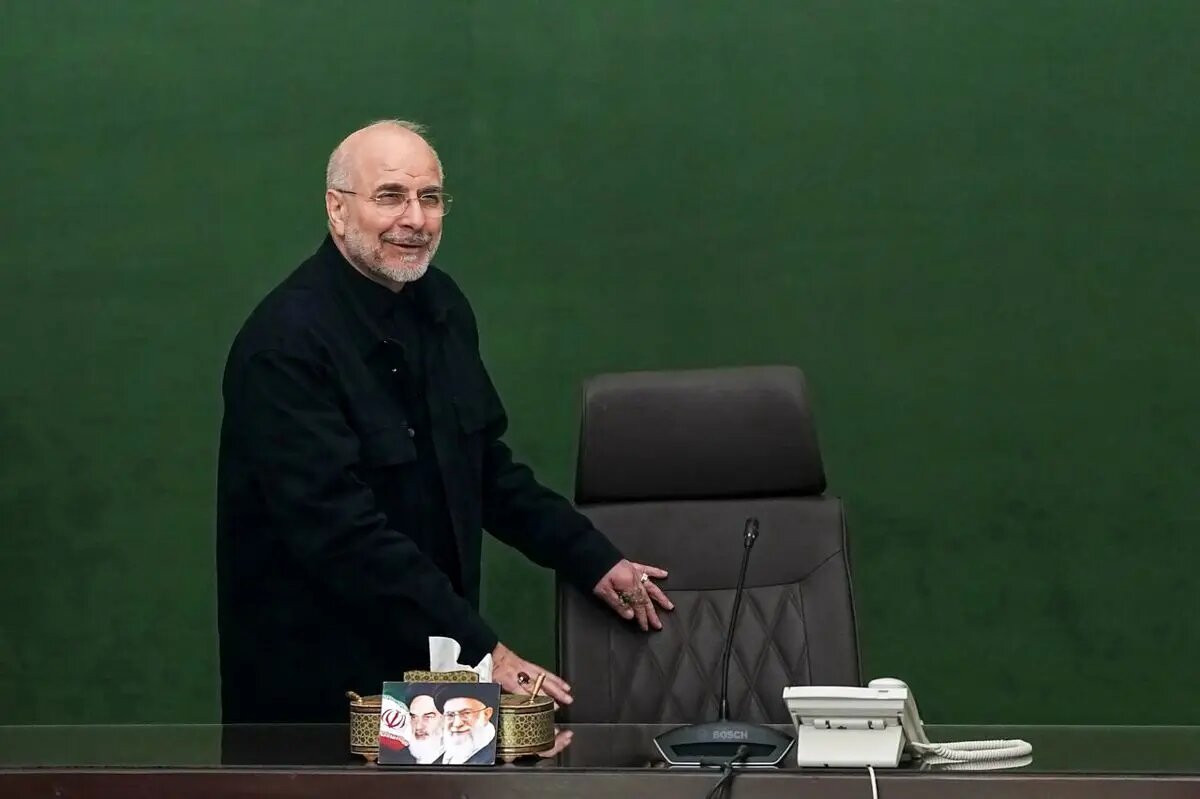
TEHRAN – The reelection of Mohammad Baqer Qalibaf as Speaker of the Iranian Parliament by an overwhelming majority carries significant political weight amid a psychological warfare campaign waged by the United States and Israel following their setbacks in the recent war.
On Monday morning, Qalibaf secured 235 of the 271 votes cast by lawmakers in the legislature’s first session since the start of the joint US–Israeli war on February 28. He has now assumed the top parliamentary post for a third term in the current parliament, which began its four-year mandate in May 2024 and will run until May 2028. He also served as Speaker throughout the previous parliament from May 2020 to May 2024.
Qalibaf is an Iranian politician and former military commander who has held several senior positions within Iran’s political and security establishment. At the outbreak of the Iran–Iraq War in 1980, he joined the Islamic Revolution Guard Corps (IRGC) and served as a frontline commander, later rising to lead key divisions in major operations during the conflict. He subsequently built a long career in Iran’s security and political system, serving as head of the IRGC Air Force in the 1990s and later as Chief of the Iranian Police Force (NAJA) from 2000 to 2005. Before becoming Speaker of Parliament, he was Mayor of Tehran from 2005 to 2017, overseeing major urban development and infrastructure projects.
Qalibaf has been an active voice during the US–Israel war, articulating Iran’s official political and military positions. He has also participated in high-level diplomatic engagements following a ceasefire on April 8 that temporarily halted 39 days of fighting.
Since the Pakistani-mediated negotiations were held in Islamabad on April 11, he has served as Iran’s top negotiator in talks with the US. Qalibaf has stressed that Iran remains open to dialogue but will not give in to pressure, threats, or political coercion from Washington.
Qalibaf is widely regarded as a trusted figure within Iran’s political and military establishment, and his public profile has grown during the course of the conflict. On May 17, he was appointed Iran’s special representative for China affairs following a proposal by President Masoud Pezeshkian and approval by the Leader of the Islamic Revolution Ayatollah Seyyed Mojtaba Khamenei. The appointment reflects the importance of strengthening strategic ties with China, which has strongly condemned the US–Israel war.
In a broader context, Qalibaf’s expanding role reflects a consolidation of Iran’s political and security messaging amid regional tensions and confrontation with the United States and Israel.
President Donald Trump has claimed that rifts exist between Iran’s military and political leadership. Qalibaf and other Iranian officials have dismissed such claims, describing them as part of a broader information and media campaign aimed at shaping perceptions rather than reflecting realities on the ground. Qalibaf has argued that these narratives are intended to obscure strategic setbacks for the United States and its allies.
For Iran, engagement with the United States is viewed as a means of translating battlefield success into political leverage while maintaining a firm stance against pressure in negotiations. Hence, Qalibaf’s combined military and political background has positioned him as an important figure in shaping this approach.
Overall, Qalibaf’s reelection shows continuity in Iran’s political system at a time of increased external pressure. It reflects institutional unity and a preference for experienced leaders in handling confrontation, diplomacy, and domestic stability. His role is likely to remain central in shaping Iran’s parliamentary direction and its wider response to regional and international challenges.
Leave a Comment